
From the desk of James Harren, Local Foods Economic Opportunity VISTA
Competition is a common topic in conversations of business. Businesses compete against each other to make their product or service better and more unique. They continually wrestle with their business model to get a leg up over the competition to dominate the market. While competition will always be part of running a business, many entrepreneurs find value in sharing their experiences with, and learning from, others who have similar passions and challenges. This is especially true of food and farming entrepreneurs who often form partnerships to access markets, buy each other’s products, and come together to learn from each other and not feel alone in their mission. With Minnesota’s fertile soils, sunny summers, and strong agricultural and culinary tradition within our state, it is opportune to uplift these food and farming businesses.
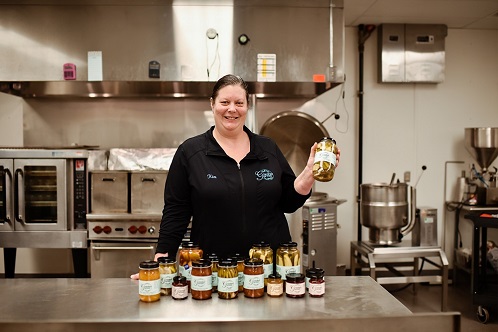
Kim Olson, owner of Grandma’s Gourmets (Albert Lea) and a Local Producer Advisory Committee member.
The Local Foods Sustainability Project aims to help these food and farming entrepreneurs in southern Minnesota excel through collaboration. The project itself was built through a collaborative effort between Minnesota Farmers’ Market Association (MFMA), Renewing the Countryside (RTC), Southern Minnesota Initiative Foundation (SMIF) and Sustainable Farming Association (SFA). One goal for the project is spurring greater collaboration between the many organizations who provide support services to food and farming businesses. Through information sharing, client referral, and collaborative programming, these groups can better serve our region’s food entrepreneurs.
As an AmeriCorps VISTA member, I am honored to be coordinating this project along with another VISTA, Maeve Mallozzi-Kelly. VISTA is a service program through the federal government that engages volunteers whose work builds capacity to alleviate poverty. We will be collecting important data and coordinating collaborative efforts to build capacity for organizations to support food producing businesses and farmers’ markets. In the coming months, we will engage in a community assessment to understand how MFMA, RTC, SMIF, SFA and other interested organizations can best support the local food economy in the region.
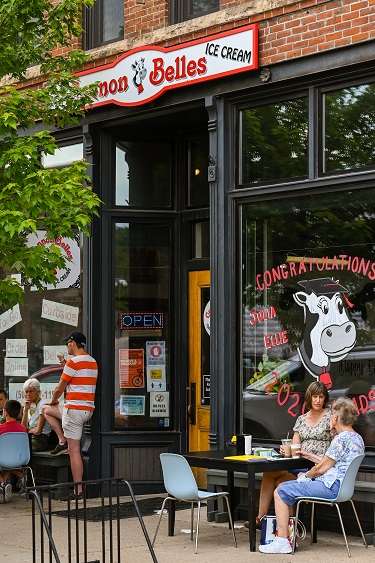
CannonBelles Cheese and Coffee (Cannon Falls) owned by Deeann Lufkin, a Local Producer Advisory Committee member.
Another way we are practicing collaboration is through the formation of two Advisory Committees who will help inform the project – one focused on local food producing businesses, and another on farmers’ markets. The committee focused on food producing businesses consists of 12 people who understand well the many ways that food and farming businesses operate. The members have a variety of backgrounds. Some work in businesses development, others at non-profits that train new growers and some produce food themselves. These people share their knowledge so that the project can in turn better support food and farming businesses that produce so much value for the region.
We formed the Local Producer Advisory Committee by sending out a call for applications to a wide group of local food groups, producers, and other business experts in the region. We are pleased to announce the following members of this new committee:
- Lisa Dierks, Regional Director of University of Minnesota-Extension (Region-wide).
- Sara George, Program Coordinator at RTC, owner of D & S Gardens (Pepin), Manager of Wabasha Farmers’ Market (Wabasha).
- Bob Kell, Training Director at Sharing Our Roots, aka The Mainstreet Project (Northfield).
- Kelly Rae Kirkpatrick, Rochester City Council Member, Ward 4 (Rochester).
- Deeann Lufkin, owner of CannonBelles Cheese and Coffee (Cannon Falls).
- Sarah Mann, founder of Driftless Grown and owner of Sweet 16 Farm (Houston).
- Amanda Nigon-Crowley, Garden Director and Coordinator at The Village Community Garden (Rochester).
- Kim Olson, owner of Grandma’s Gourmets (Albert Lea).
- Chris Schad, Director of Business Development at Destination Medical Center EDA and owner of the Bee Shed (Rochester).
- Ben Swanson, Scientist of Food & Nutrition at Agricultural Utilization Research Institute (AURI) (Statewide).
- Mark Thein, Consultant at Small Business Development Center (Region-wide).
- Dan Zimmerli, Community Organizer and Outreach Coordinator at SFA and owner of Cedar Crate Farm (Waldorf).
The group gathered for the first time late this past March. At the meeting, committee members brainstormed with project leaders about what a collaborative network of support could look like in the region. They also helped inform assessment tools that will shed light on the business technical assistance needs that food and farming businesses are facing in southern Minnesota. We look forward to the formation of the second advisory committee that will approach growing farmers’ market viability later this month. Two members mentioned above who are contributing their expertise on the Local Producer Advisory Committee are Amanda Nigon-Crowley with The Village Agricultural Cooperative and Sarah Mann with Driftless Grown. Both groups have been beneficiaries of collaborative support and now practice collaboration themselves.
The Village Agricultural Cooperative
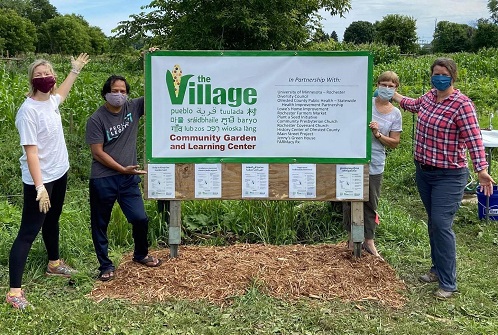
The Village Community Garden (Rochester). Amanda Nigon-Crowley is the Garden Director and Coordinator at The Village and a member of the Local Producer Advisory Committee.
The Village, for which Amanda is the Garden Director and Coordinator, is a gardening community that provides land and assistance to aspiring growers in Rochester. The Village originally aimed to uplift the Cambodian community specifically but has expanded their reach to serve all new Americans and first-generation growers in the area. SMIF announced earlier this year the awardees of its one-time Inclusive and Equitable Communities Grant of which The Village was a recipient. With the funds, The Village has been able to add a new initiative that aims to support their community growers who are interested in expanding their operation and selling products. In addition, RTC’s land access navigators supported The Village in finding new land around Rochester to expand their gardening community. The Village’s garden space now totals about five acres and supports 160 growers and their families. It’s thrilling to see this development, especially in a pandemic!
Driftless Grown
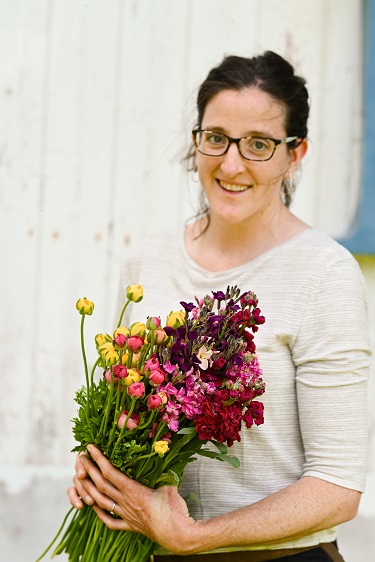
Sarah Mann, owner of Sweet 16 Farm (Houston), founder of Driftless Grown and a member of the Local Producer Advisory Committee.
Sarah Mann, owner of Sweet 16 Farm, started up Driftless Grown in 2018 with other producers she knew around Houston. The group of about 20 geographically proximate producers came together to share skills and develop community as local food producers. Driftless Grown has been the recipient of two grants from SMIF through SMIF’s efforts to build a strong local foodshed. These grants have supported the creation of Driftless Grown’s website, the development of skill-sharing workshops, and the distribution of mini-grants to ease the economic difficulties of COVID-19. With these grants and the enthusiastic initiative of its members, Driftless Grown has developed into a collective marketing and skill-sharing group with over 125 member-producers. Recently, they have launched a survey – Groundswell – Finding Our Connections – for farmers in the Driftless region of southeastern Minnesota to support stronger skill-sharing, tool libraries, and gather input into Driftless Grown’s programming. We’re excited to see where these collaborations will go.
These efforts show the power of collaboration to achieve collective goals. We are so glad to have Sarah, Amanda and the 10 other members of the Advisory Committee to share in their knowledge. The committee members do such wonderful work in southern Minnesota, and we’re proud to collaborate to achieve our shared goal of supporting our local producers. These producers offer us greatness in return: scrumptious food from our friends and neighbors and a stronger local economy. What could be better?!
If you have any comments on how the Local Foods Sustainability Project could better serve food and farming businesses and farmers’ markets in southern Minnesota, please contact James Harren at jamesh@smifoundation.org or 507.214.2014 or Maeve Mallozzi-Kelly at maevem@smifoundation.org or 507.214.7025.
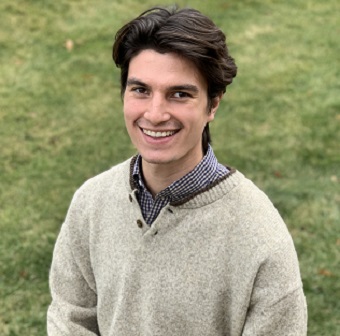
James Harren is the Local Foods Economic Opportunity VISTA at SMIF.