
Photo: Aaron Wills, owner of Little Hill Berry Farm in Northfield (member of Cannon Valley Grown).
Southern Minnesota has a rich variety of food producers. Whether they’re raising pigs or sheep, growing blueberries or making cheese, each plays an important role in the local foods economy. While this work can be incredibly fulfilling, it can also be difficult to manage independently.
Jack of all trades
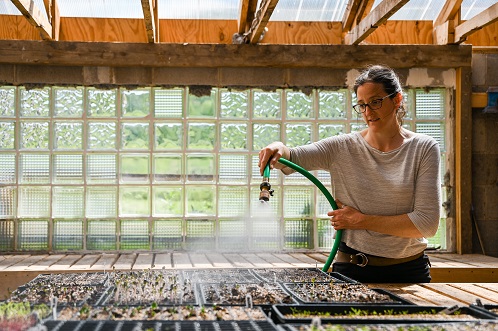
Sarah Mann, who helped launch the regional food brand Driftless Grown, waters seedlings at her farm in Houston.
“Not only are we doing our work as farmers, we are also forced to be jacks of all trades,” says Sarah Mann, owner of Sweet 16 Farm in Houston, Minn., which grows flowers and hops and hosts onsite events. “Marketing, bookkeeping, infrastructure and equipment repairs: one person doing everything leads to isolation and burnout. It is not a sustainable business model.”
To help, Sarah reached out to her fellow Houston County producers in 2016. Together, they designed a support network to share skills and market their products as Driftless Grown, a new initiative helping producers in Minnesota’s Driftless Region.
Around the same time, a group in the Cannon River watershed—an area covering several counties, including Rice and Goodhue—started exploring ways to collaboratively market their products to ease the burden of working alone. Ultimately, they came up with the concept of a regional brand called Cannon Valley Grown.
What is a Foodshed?
Much like a watershed, which encompasses the flow of water supporting a particular location, a foodshed is the geographic region where food is both produced and consumed. Branding food by the place where it’s produced has become a popular marketing method as more customers choose to buy local.
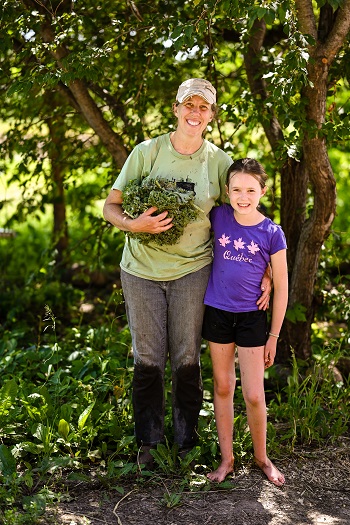
Erin Johnson, owner of Open Hands Farm in Northfield, and her daughter. Member of Cannon Valley Grown.
There was a lot of energy around building these regional brands—Cannon Valley Grown united under the umbrella of the Cannon River Chapter of the Sustainable Farming Association (SFA)—but moving forward without funding was a challenge. Luckily, in 2018, they received a FEAST! Smart Start Grant from Southern Minnesota Initiative Foundation (SMIF), a philanthropic organization supporting economic and early childhood development and community vitality efforts in 20 counties of southern Minnesota.
“We had seen the FEAST! grant and decided to go for it,” says Gwen Anderson, Board Secretary for SFA’s Cannon River Chapter. “We put together the proposal and got the grant. A big part of it went toward developing a website for CVG and to launch the brand. It moved things forward.” The funds also helped produce a farmer directory and organize networking and educational workshops.
Meanwhile, Sarah Mann and Driftless Grown worked with the Houston County Economic Development Authority on a different entrepreneur-focused SMIF grant, which they received and ultimately used to host skill-sharing workshops, launch their brand, build a website and create a multi-state product directory. In total, SMIF invested $28,000 in the two foodsheds to increase the viability of farms and strengthen the local economy.
COVID-19 Impact
As these groups were getting their brands up and running, the pandemic hit. While food producers were able to continue operations, there were new restrictions on face-to-face sales and distribution channel disruptions. SMIF reached out to Cannon Valley Grown, Driftless Grown and Renewing the Countryside—SMIF’s long-time nonprofit partner in local foods efforts—to form an alliance to support farmers during COVID. Each organization received a $10,000 Grow a Farmer Assistance Grant from SMIF to connect consumers with approximately 120 farmers in southern Minnesota.
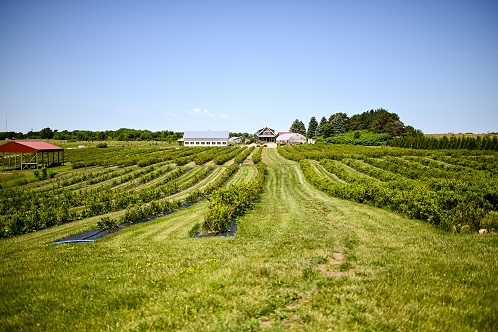
Little Hill Berry Farm in Northfield
“Some [farmers] had unexpected expenses like having to develop new signage, or implement new safety measures for cleaning and sanitizing,” Mann explains. “Many previously relied on in-person sales and needed help building an online presence.” They also built handwashing stations to distribute to farmers for free and are creating marketing campaigns to create more awareness about their brands.
Despite these new challenges, farmers have seen a silver lining. As customers raced to the stores to stockpile groceries, the uncertainty about food shortages caused many people to look for local products in a way that they previously had not. “We’ve known all along that buying local is how we are the most secure,” says Mann. “The pandemic has demonstrated that importance.”
With food producers from these regional foodsheds working together and learning from each other, they are creating a stronger, more resilient food system in southern Minnesota. And that’s not just good for their stability and bottom line—it’s good for us all.
Southern Minnesota Initiative Foundation supports local food entrepreneurs through a variety of initiatives, primarily through the FEAST! Local Foods Network. SMIF also offers low interest loans through its Grow a Farmer Loan fund. Find out more at smifoundation.org. This story is from the 2020 FEAST! Local Foods Magazine.
To learn more about these regional foodshed brands visit cannonvalleygrown.org and driftlessgrown.com. Hear from Gwen Anderson from Cannon Valley Grown in the video below.