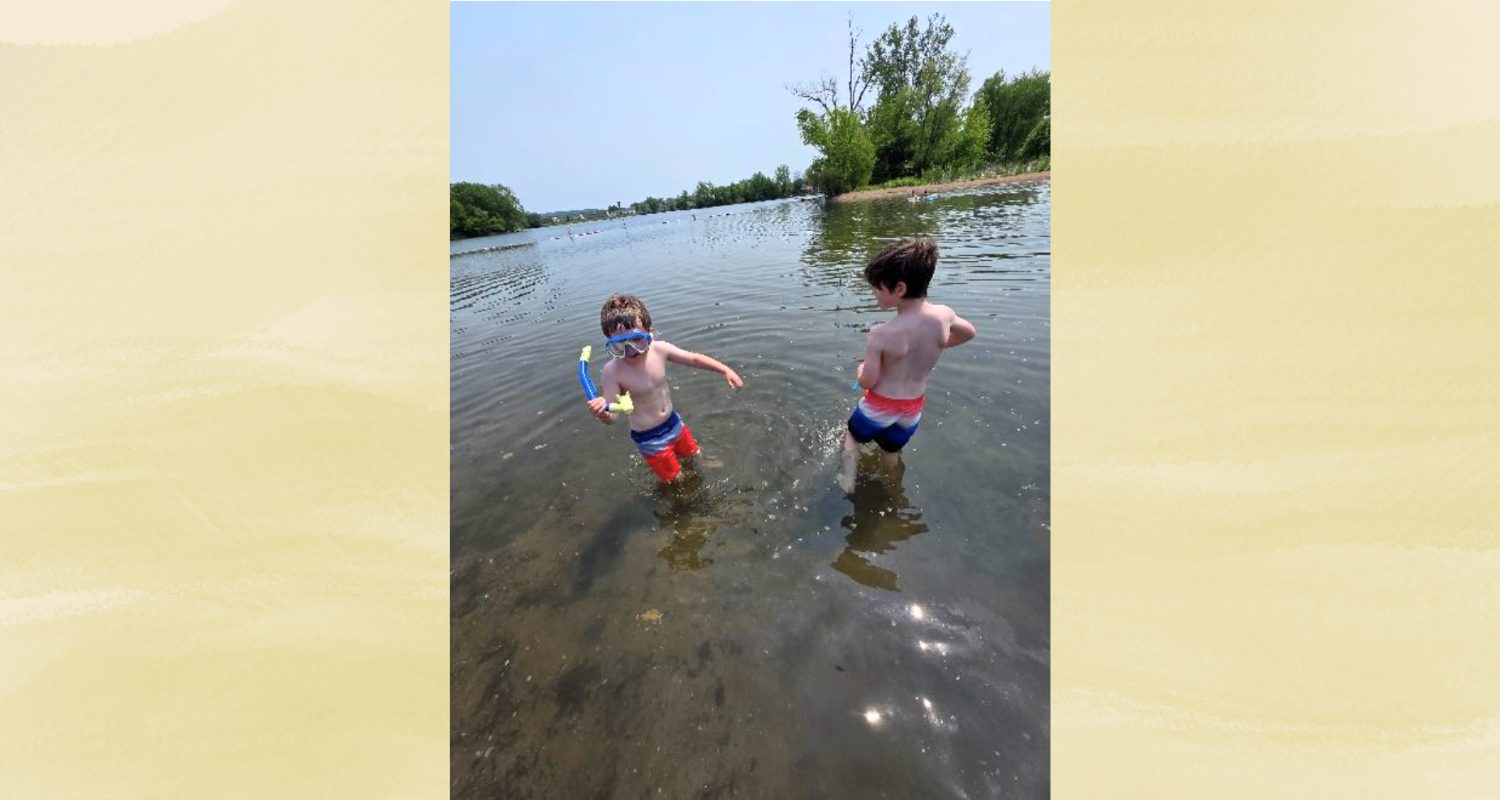
Photo: Kids playing at an improved beach area in Goodview thanks to a Taylor Rural Improvements Grant; photo courtesy of the Klinger family.
FOR IMMEDIATE RELEASE
Op/Ed
August 27, 2026
One of the greatest advantages of living in a rural community is the opportunity to truly know your neighbors.
Not in a vague or nostalgic sense, but in a tangible, human way. These are the people you see at the park, the ballfield, the library, the lake, the school concert and the community celebration. They’re the people who show up when there’s a need, volunteer for local causes and invest their time in making their hometown stronger.
Those relationships are one of southern Minnesota’s greatest assets. But they don’t happen by accident. They require two kinds of infrastructure: physical infrastructure and relational infrastructure.
Physical infrastructure is easy to see. It’s the playground, community center, beach, childcare facility or local coffee shop. Relational infrastructure is less visible, but just as important. It’s the trust, connections, sense of belonging and civic engagement that grow when people have places to gather and opportunities to connect. At Southern Minnesota Initiative Foundation (SMIF), we’ve long recognized that strong communities need both.
That’s what makes both the Taylor Rural Improvements and Taylor Rural Childcare Grants unique. Funding for capital projects is often one of the hardest resources for rural communities to secure. Roofs need replacing. Buildings need renovating. Public spaces need updating. These projects are essential, but they’re often difficult to fund through traditional sources. Thanks to Glen Taylor’s visionary investment in southern Minnesota, SMIF has been able to help communities build and improve the physical spaces that allow social connections to flourish. In fact, this year’s Taylor Rural Improvements Grant is focused exclusively on community gathering spaces. Three years after Glen Taylor established this charitable legacy, we’re already seeing the results.
In Goodview, Taylor funding helped improve the city’s beach area. On paper, it’s a capital improvement project. In reality, it’s an investment in countless moments of connection: grandparents watching grandchildren play, neighbors gathering on summer evenings and families creating memories together.
In the Gibbon-Fairfax-Winthrop area, funding supported a community resource bus that helps residents access services and connect with supports across communities. You can find the bus driving directly to where families gather, standing out on the roads thanks to a painted mural of their rural landscape designed by the student art club. The project meets practical needs, but it also strengthens relationships and ensures people remain connected to the community around them.
These projects remind us that the most important outcome of physical infrastructure is often what happens within it. A gathering space is ultimately about gathering. A community facility is about community.
The same idea applies to childcare.
This fall, SMIF is accepting applications for both the Taylor Rural Improvements and Childcare Grants and our Early Care and Education Grants. While these programs support different kinds of investments, they share a common goal: strengthening the foundations of thriving communities.
Childcare facilities are physical infrastructure. The children and families they serve are relational infrastructure. When we invest in high-quality early care and education, we’re helping young children develop the social and emotional skills that shape how they learn, build relationships and contribute to their communities. We’re investing in future volunteers, caregivers, business owners, teachers and neighbors. In many ways, early childhood is where relational infrastructure begins.
The future of rural Minnesota will always depend on strong infrastructure. But some of our most important investments aren’t measured in concrete, lumber or square footage. They’re measured in relationships. When we invest in the places where people gather and in the children who will inherit our communities, we’re strengthening both the physical and relational infrastructure that makes rural Minnesota special. And in doing so, we’re preserving one of our region’s greatest strengths: the ability to truly know our neighbors.
To learn more about these grants and to apply, visit smifoundation.org/grants/for-grant-seekers/. All three applications open on September 8 and are due by October 6.
As always, I welcome your comments and questions. You can reach me at benyak@smifoundation.org or 507-455-3215.

Benya Kraus, president and CEO of Southern Minnesota Initiative Foundation