Dundas
By Haley Kimmet Teopaco
Executive Director, A Great Day Farm
Thanks to Southern Minnesota Initiative Foundation's (SMIF) generous investment, we've been able to launch a more coordinated and sustainable approach to adaptive cycling in our community and region. With the funds from the Small Town Grant, we immediately got to work constructing a bike shed attached to our recreation center using recycled telephone poles to help keep costs down. The new shed provides weather protection while maintaining easy self-service access, which allows us to extend our cycling season and take advantage of unexpected nice weather days in early spring and late fall.
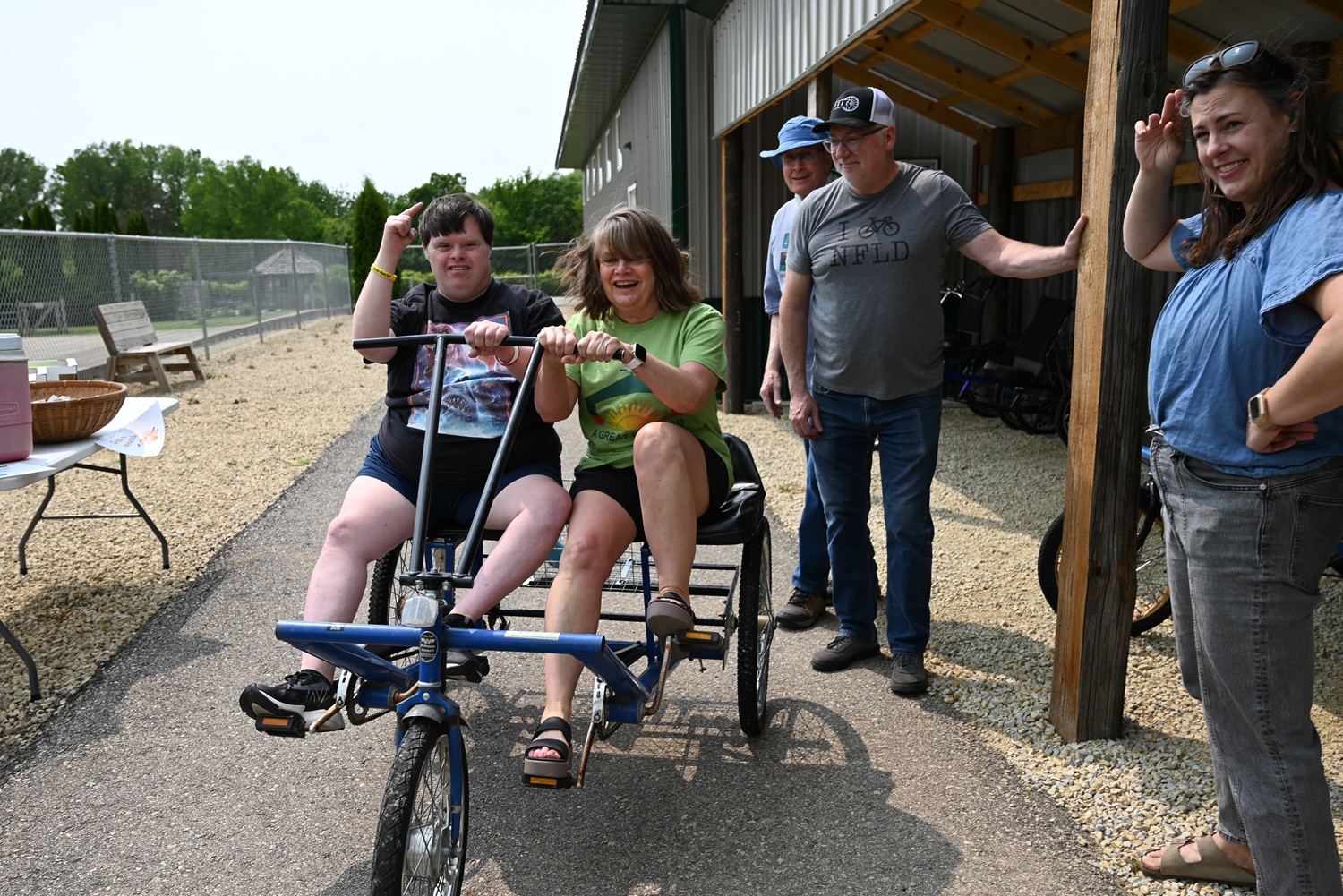
We also expanded our fleet with three new adaptive bikes, thanks to generous donors who learned of our needs through the grant and word-of-mouth. In addition, we added helmets in varied sizes to ensure a safe and inclusive experience for all riders.
In May, we partnered with Laura Baker Services Association and Farmstead Bike Shop to host an adaptive cycling kick-off event that welcomed around 30 participants—including individuals, families, caregivers, and volunteers. One adult participant who had never ridden a bike before eagerly tried every model, while another, who previously only used a balance bike, successfully rode one of our trikes for the first time.
Experiences like these show how our farm offers a unique, low-risk, traffic-free space for people to try adaptive bikes, whether they're looking for a recreational experience or exploring a future purchase. We're continuing to grow this initiative by expanding our outreach and partnerships, developing volunteer training with a focus on intellectual and developmental disabilities, and exploring opportunities to bring in "guest bikes" from vendors for trial. This effort has been energizing, joyful, and filled with unexpected ripple effects.
We are so grateful to Southern Minnesota Initiative Foundation for the support – it's allowed us to build so much momentum & energy around adaptive cycling (especially for individuals with more significant support needs) in the region.