
Choosing His Own Course: Andy Altenburg’s Entrepreneurial Journey
Race car driving is filled with a series of calculated decisions, such as strategic weight placement, choice of shocks and tightness, even choosing the correct length of bolts and amount of fuel used. It is part of a much larger, arduous process, leading up to an end goal. The many decisions and pieces can lead down a windy road of success or a discouraging path of struggles – even failure. Andrew (Andy) Altenburg, president of Altenburg Construction in Lewisville, Minn., has experienced this both on and off the track.
Although he is an avid race car driver and has a passion for being behind the wheel, he has an even greater drive to be an entrepreneur. Andy’s entrepreneurial journey has taken similar turns. All of his decisions and experiences throughout his life have culminated into where he is today: a successful business owner, fueled with life who is now giving back. His advice to entrepreneurs: never give up.
Building the Pieces
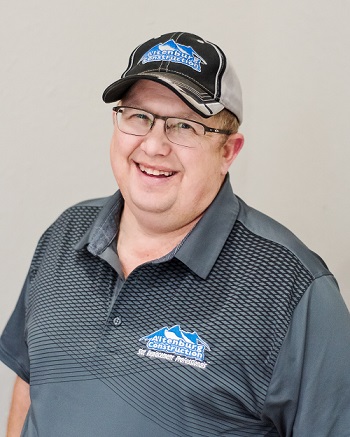
Andy Altenburg, founder and president of Altenburg Construction
The person he is today all began with his upbringing, which wasn’t always stable. Additionally, his stepfather was a service member, so Andy bounced around between military bases. It was during that time when his entrepreneurial spirit started to grow. Andy’s first so-called “business venture” was mowing lawns on the military bases he lived at a young age. “I would undercut 16-year-olds by half the cost and was making what I thought was a ton of money,” he said.
During the summer months, Andy worked on his grandparents’ farm in Truman, Minn. “Every summer we would always go back, no matter where we lived.” Chores consisted of walking beans, tasseling corn, baling hay and caring for livestock. He was 12 years old when his mom divorced his stepdad, which moved him to Minnesota permanently. Learning how to work the farm was the start of something bigger than Andy could have imagined at that time.
First Step Back
Andy’s first legitimate business was in recycling in the 90s called Superior Bedding. “I worked with four different organizations for money,” Andy said, about getting his business started. “I was in my early 20s and went in front of a board of 20-25 people because I was asking for a loan through the State and did my speech.” He credits his public speaking experience from 4-H and recalls, “My step-brother and step-sister, 12 and 13 years old, went with me to Minneapolis somewhere. I remember asking for a $20,000 loan and they gave me a $10,000 grant, which I was shocked.” Andy also worked with the Small Business Administration, his local bank and Southern Minnesota Initiative Foundation (SMIF) to receive additional loans.
“Unfortunately, I went broke and wasn’t able pay back the loan from SMIF,” he said. “I learned a lot of valuable lessons. Expensive lessons,” he said with a chuckle. “It also led to what I have now.” He was shredding newspaper for animal bedding and sold other grades of paper to paper mills for recycling. What transpired in the livestock industry at that time was that animal barns were being built with metal slats, not needing the bedding anymore. The raw materials ended up costing Andy and his business more than the amount he was getting from selling. He eventually sold it all directly to the paper mills just to survive.
Getting Back Up
Andy took some time to figure out where to go next and suffered months of depression. With help from his grandmother, he picked himself back up and took a job with a hog farmer who had confinement barns, where full grown pigs are housed toward the last phase of swine production. It is crucial to keep them clean and healthy, which is done by placing slats on the floor so waste can filter down below.
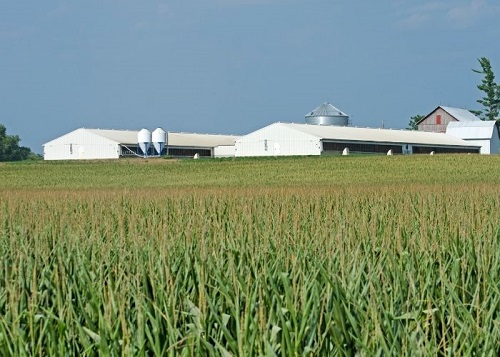
Altenburg Construction specializes in hog slat replacement.
Drawing from farming experience with his family, this seemed to be a fitting choice. “They were building a tremendous amount of barns at that time,” he explained. While at that job, the construction manager approached him about another opportunity. During the process of placing the slats in the barns, there is a gap between them in the flooring, which requires grouting. “I’ve always been ambitious, so I was working with this hog farmer, another farmer, and a thought, do I really need another thing to do?” said Andy. “Then he told me I could make $1,000 each barn. I thought, ‘How hard is it to mix some sand and cement?’” Andy started grouting barns on the side and building relationships with slat manufacturers. Larger companies took on larger jobs, and, as Andy explained, “It was right up my alley.” He took on work in the evenings and weekends, getting calls directly from farmers to grout.
Progress was slow at first, working part-time for two to three years. He did smaller barns by hand, with a gadget to carry a gang, or group, of slats. “Then we modified that piece of equipment to work specific for gangs because that was the trend [in the industry],” explaining that slat replacement was no longer done by singles anymore. “It took a while, but we would do random projects here and there, replacing slats and beams.” As barns aged, business grew. He founded Altenburg Construction in 1994 and today it consists of 35 employees and a footprint across 14 different states. They are leading professionals in hog and cattle slat replacement.
With an improved process and motorized equipment, and despite several health complications throughout his life, things have taken off for Andy and his business. Barns that were built in the 1990s are now needing replacement pieces, with the flooring having a lifespan of 25-30 years. “Now we are really starting to hit our stride and that’s how we have gained so much volume.”
Giving Back
Andy remains focused on the future, continuing to make equipment and processes easier, faster, and better. “I always try to step back and see the needs of our company, not only personnel needs but equipment needs, and always try to be ahead of it.”
 In the process of reinventing his business approach, Andy has made promises to himself to help others who have helped him along the way: family and friends, employees, aspiring entrepreneurs, his local county, and SMIF. Though his first business was unsuccessful at the time, the loans and support he received set him on his way to a larger success. He made a promise to himself that he would pay it back, or rather, pay it forward for other entrepreneurs to get the same opportunity that he did. “This all reverts back to what I’m hoping to do for somebody who has an idea and they can [grow] it.”
On September 30, 2021, Andy walked into SMIF’s office with a check of $10,000 to go toward the Entrepreneur Fund, which will support aspiring entrepreneurs who could use some financial support to get started. The contribution will also go to further SMIF’s work in Watonwan County, an area that gave so much to Andy during his journey. He will continue his connection with SMIF by participating as a judge in the Aspiring Entrepreneurs Business Competition in March 2022.
It is because of people like Andy, who see the good that some help can do and length that it can go. It may not be clear in the beginning, but eventually the pieces all come into place.
Andy’s advice to others: “All of us are going to be presented with issues that we have to overcome in life and, especially if you choose to be an entrepreneur, you’re going to have more. Never give up.”